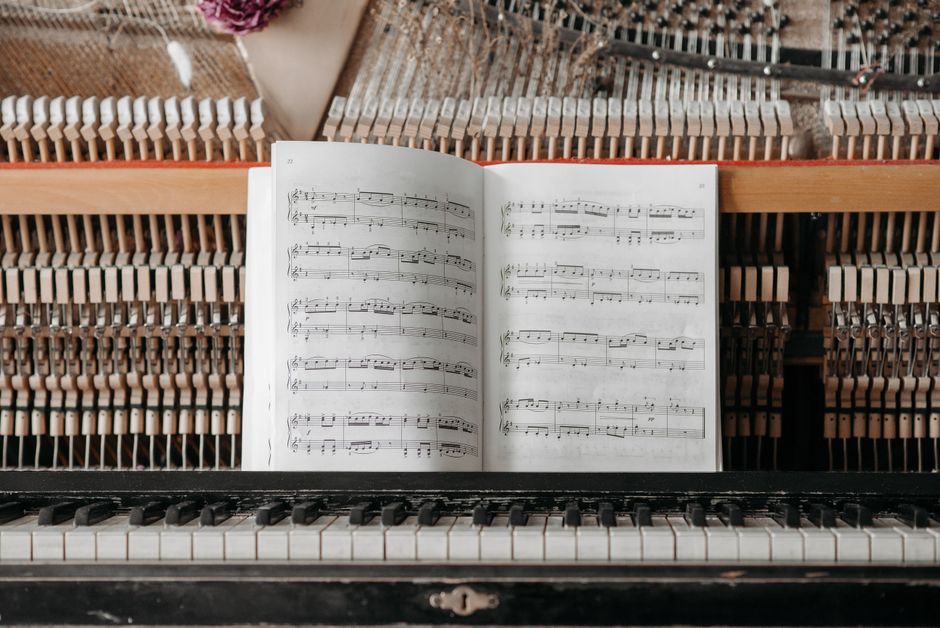
Musical notation can look intimidating at first glance, but it's simply a visual language designed to communicate musical ideas. Once you understand the basic symbols, reading music becomes as natural as reading words. Here's a practical guide to the fundamentals.
The Staff and Clefs
Music is written on a staff—five horizontal lines with four spaces between them. For string players, you'll primarily use the treble clef (violin and viola) or bass clef (cello and double bass). These clefs simply identify which notes correspond to which lines and spaces. Memorising the lines and spaces takes practice, but most beginners have them down within a few weeks.
Note Duration
Different note shapes indicate how long to hold a sound:
- Whole notes (open oval) last four beats
- Half notes (open oval with stem) last two beats
- Quarter notes (filled oval with stem) last one beat
- Eighth notes (filled oval with stem and flag) last half a beat
Rests—symbols indicating silence—have corresponding durations. A rest is just as important as a note; silence is part of music's structure.
Tempo and Time Signature
The time signature (two numbers stacked at the start) tells you how many beats are in each measure. 4/4 time, the most common, means four quarter-note beats per measure. The tempo marking (often in Italian, like "Allegro" for fast or "Adagio" for slow) indicates the speed. Metronome markings like "♩ = 120" specify the exact tempo.
Dynamics and Expression
Dynamics indicate volume: p (piano) means soft, f (forte) means loud, and various combinations like mp (mezzo-piano) offer subtlety. Crescendo (gradually getting louder) and diminuendo (gradually getting quieter) are shown with wedge-shaped symbols. Expression markings like "legato" (smooth and connected) or "staccato" (short and separated) describe how to play the notes.
Accidentals and Key Signatures
Sharp (#) raises a note by a semitone; flat (♭) lowers it. Natural (♮) cancels a previous sharp or flat. The key signature at the start shows which sharps or flats apply throughout the piece, eliminating the need to mark every occurrence.
Articulation Marks
Dots above or below notes indicate staccato (detached). Curved lines (slurs) show which notes to play smoothly connected. A small dash indicates a separated but not staccato style. These subtle marks dramatically affect how music sounds.
Learning Strategy
Don't try to memorise everything at once. Start with whole, half, and quarter notes, then gradually add other elements. Your teacher will introduce symbols as you encounter them in pieces you're learning. Flashcards and online games make symbol recognition practice enjoyable.
Remember: even experienced musicians occasionally need to check a symbol's meaning. Notation literacy develops through regular reading practice, not memorisation. Embrace the learning process, and soon you'll be reading music fluently.
